Todorov's Theory
Todorov was a Bulgarian literary theorist. He suggested that most narratives start with a state of equilibrium meaning that everything is normal in life and that there is no danger or harm. Then life is brought into a disequilibrium, meaning that trouble has been caused and that normal life has been significantly disrupted. He suggested that this state of normality is disrupted by an outside force and is forced to be fought against to return to normality. Once the outside force has been fought the state of equilibrium is then returned and normal life is carried on.

Barthes's Theory
Barthes was a french semiologist. He suggested that narrative works in five different codes which in turn activate the reader to make sense of the narrative being transcribed. The first code is Action. This means that a resolution is produced through action e.g fighting of a man to win the woman you love. The second code is Enigma. This teases the audience by presenting a riddle or puzzle that has to be solved in order to establish a resolution e.g finding out who is black-mailing a person by looking at the clues they've left. The third and fourth codes are Symbolic and Semiotic. These the same thing yet also the opposite as they represent connotation and denotation. These are the signs and motif that are present within a narrative such as a gun or a special book. In the James Bond films, a motif would be that he always asks for a Vodka Martini 'Shaken not stirred'. These can also be opposites for example calling someone 'strong minded' is a positive connotation yet it is also the same as saying they are 'Stubborn' which is a negative connotation. The fifth and final code is Cultural. This is where the audience can recognize as being part of a culture e.g The Godfather and being part of the Mafia culture.

Levi-Strauss
Levi-Strauss was a social anthropologist who studied mythes of tribal cultures. He examined how stories unconsciously reflect the values, beliefs and myths of a culture. His research has been adapted by media theorists to reveal underlying themes and symbolic oppositions in media texts. For example binary oppositions: Home Steaders V Native Americans, Christian V Pagan, Domestic V Savage, Weak V Strong, Garden V Wilderness and Inside Society V Outside Society.
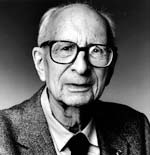
Vladimir Propp
Propp's theory was that he suggested that every narrative had character roles that included a villain, a dispatcher, a helper, a seeker hero, a prize and a doner. A stereotypical example would be a villain takes a girl to his lair. The seeker hero has to travel to save the girl but confronts challenges along his way. He meets the helper who accompanies him on his quest and helps him. The doner gives them something that will also help them e.g a map, advice, a sword etc. Once the villain is defeated and the hero saves the girl, they fall in love and she is his 'prize'.


No comments:
Post a Comment